
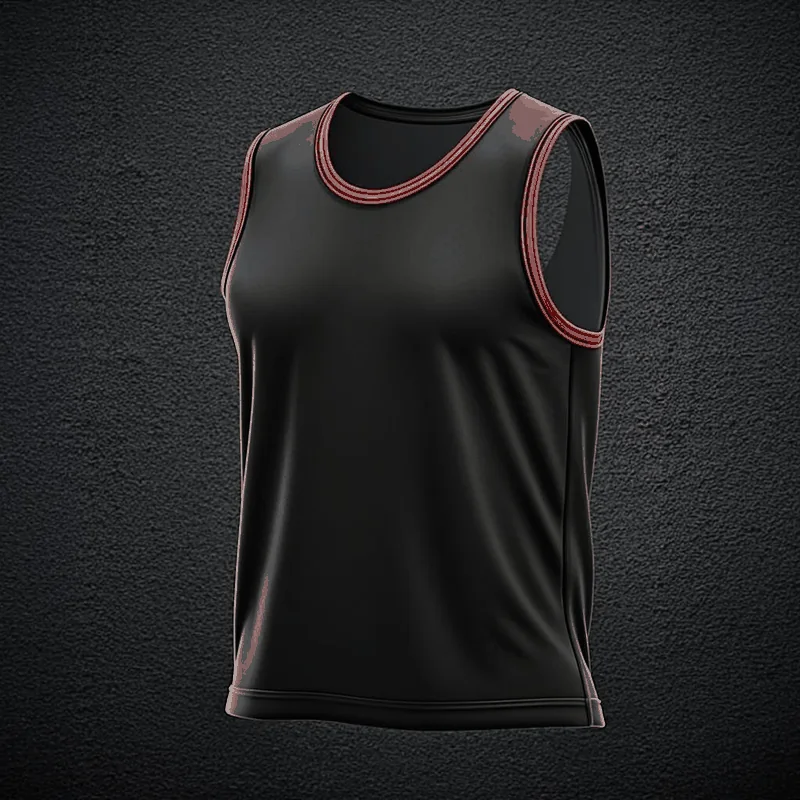
Basketball is the sport where uniform design culture runs deepest — from tackle-twill lettering heritage to today's full-sublimation gradients, every era of the game has its own uniform language. This guide covers everything a coach, club director or school program needs when ordering custom basketball uniforms in 2026: reversible versus standard jerseys, mesh and dazzle fabrics, sublimated design freedom, number rules, women's and youth cuts, real pricing and roster planning — written by the manufacturing team that produces sublimated basketball uniforms for teams in the USA, Europe and Australia.
01What's in a basketball uniform package?
The core uniform is a two-piece set — jersey and shorts — but competitive programs order a full kit around it:
- Game jersey — sublimated with your team design, numbers and names; the lightest garment in team sports.
- Game shorts — matching sublimated design, engineered waistband, cut for sprinting and jumping.
- Reversible practice jersey — the practice standard: a dark side and a light side in one garment for instant scrimmages.
- Warm-up shooting shirt — a long-sleeve half-and-half design worn for warm-ups and on the bench.
- Bench and travel layers — team hoodies, track jackets and backpacks that extend the program identity off court (see team packages).
Ordering all layers in one production run keeps colors consistent across the program and unlocks volume pricing — the most common regret we hear from club directors is ordering the jerseys first and the hoodies never.
02The two silhouettes: reversible vs standard jerseys
Reversible jerseys are double-layer garments with a full design on each side; standard game jerseys are single-layer. Both belong in a serious program — they solve different problems:
| Factor | Reversible Jersey | Standard Game Jersey |
|---|---|---|
| Construction | Double-layer, full design each side | Single layer, one design |
| Typical fabric | Layered dry mesh, heavier combined weight | Lightweight mesh or dazzle, 140–180 GSM |
| Cost | $28–$55 | $18–$40 |
| Best for | Practice, scrimmages, camps, AAU clubs needing two looks | Game day, fitted professional look |
| Feel | Structured, slightly warmer | Lightest, most breathable option |
The classic program structure: standard jerseys and shorts for games, reversibles for everything else. That combination covers practice, tournaments with clash colors and camps — one garment doing three jobs.
Factory Tip — Reversible Rules
- Split the two sides at least 70/30 in contrast — each side must read as one team's color from the far end of the court, not as a mix.
- Numbers go on both sides, positioned so front and back numbers never overlap or shadow through the layers.
- Insist on breathable layered mesh: a cheap double-layer reversible turns into a sauna by the second quarter.
03Basketball fabrics: mesh, dazzle and poly-spandex
Basketball fabric is about air. A full-length game is played in a heated gym, so the fabric system has to move moisture and dump heat. The three families we cut most:
- Lightweight mesh — open-hole knit, the standard for game jerseys; maximum airflow, sublimation-ready, 140–160 GSM.
- Dazzle — a shiny, smooth knit with a slight sheen; the retro-chic choice for programs chasing a classic look, typically 160–180 GSM.
- Poly-spandex mixes — 4-way stretch blends (around 90/10) used in fitted cuts and compression-style shorts; they move with the athlete and hold their shape all season.
Whatever the knit, look for moisture-management finishing and a GSM stated in writing. Basketball uniforms are washed more often than any other team garment — cheap fabric pills first at the number edge.
04Full-sublimation design freedom
Sublimation is why modern basketball uniforms look the way they do. Because the design is dyed into the polyester rather than printed on top, anything printable is produceable at no extra cost:
- Gradients and fades — smooth color transitions across the whole garment, the defining look of the past decade.
- Photographic patterns — city skylines, team mascots, geometric repeats at photo resolution.
- Side piping and color splits — razor-sharp diagonal seams of color that frame the body in motion.
- Tackle-twill numbers for retro looks — stitched layered numbers over a sublimated body, the heritage option for throwback designs.
The discipline is restraint: one hero graphic per garment, high-contrast numbers, and a design that reads from the top row of the bleachers. For the technical comparison of printing methods, read Sublimation vs Screen Printing: Which Is Better for Custom Jerseys?
05Jersey and shorts design principles
Basketball design lives and dies on four decisions:
- Number visibility first. Front and back numbers, high-contrast against the body, tall condensed fonts. Officials, scorers and teammates all read them from distance — every second of hesitation is a missed rotation.
- Hem length. Jersey hems sit at the waistband; longer hems get grabbed in the post. Shorts hems fall mid-thigh to just above the knee.
- Short cut trends. The 2026 direction is longer shorts with a tailored taper — contemporary length without the baggy 1990s silhouette — plus styled waistbands with a visible team-colored drawcord.
- Shorts and jersey design together. The strongest sets use one continuous design element — a gradient, a split, a piping line — that flows from jersey to shorts as if they were one garment.
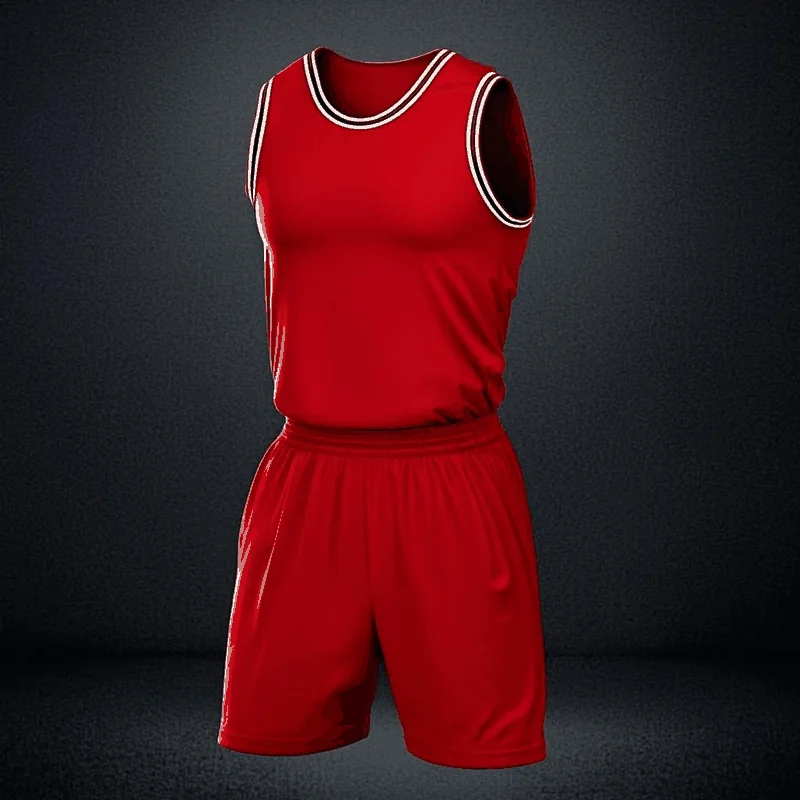
For finished examples across gradients, splits and retro looks, browse the SPORTIFY basketball uniforms collection.
06Women's and youth cuts
Basketball has one of the widest fit ranges in sport, and the women's game deserves patterns designed for it. Women's cuts use narrower shoulders, adjusted bust shaping and a slightly shorter sleeve; girls' youth cuts scale the same principles down. Programs ordering for mixed organizations should specify cuts per roster rather than defaulting everything to men's sizing — the fit difference is visible from the bleachers and felt in every shooting motion.
07AAU, club and school programs
American AAU and club basketball runs multi-team programs — two to eight teams per organization, playing most of the year — which changes how uniforms should be ordered:
- Order the program, not the team. One shared design system with per-team colorways costs less per player and brands the whole organization.
- Practice plus game combos. Reversibles for practice, standard sets for games — the two-silhouette structure from section 02 is the AAU default.
- Archive everything. Tryouts add players every cycle; an archived design means new players get matching gear in weeks, not a redesign.
School and college programs in Europe and Australia increasingly follow the same structure as basketball globalizes. Wherever you are, the planning advice is identical: order 6–8 weeks before the first game.
08What custom basketball uniforms cost in 2026
Expect $18–$40 for a game jersey, $14–$30 for shorts and $28–$55 for reversibles, with shooting shirts at $20–$35. Realistic 2026 ranges:
| Item | Budget Range | Premium Range |
|---|---|---|
| Game jersey (sublimated) | $18–$25 | $32–$40 |
| Game shorts | $14–$19 | $24–$30 |
| Reversible jersey | $28–$38 | $45–$55 |
| Shooting shirt (warm-up) | $20–$26 | $30–$35 |
| Full game set (jersey + shorts) | $30–$42 | $52–$65 |
Volume, fabric choice (dazzle and poly-spandex carry a small premium over standard mesh) and extras such as names on jerseys move the final number. Single replacement pieces cost the most per unit — no-minimum ordering covers late roster additions. For cross-sport pricing, see How Much Do Custom Team Uniforms Cost? The 2026 Price Guide.
Get a free mockup for your program
Send your logo, colors and roster count — SPORTIFY's design team returns a digital mockup and a quote, free, before anything goes to production.
09Sizing and roster planning
- Measure every player — chest for jerseys, waist and hip for shorts — and map to the manufacturer's chart, not retail brand sizes.
- Order by cut as well as size: men's, women's and youth patterns differ in shape, not just scale. A women's medium is not a small men's jersey.
- Assign numbers before production. Sublimated numbers cannot be added or changed after sewing; collect the roster with sizes and numbers together.
- Keep two or three spare sets in common sizes (M, L, XL) for late additions — and order the same design again next season as a reorder, not a redesign.
- Order 6–8 weeks before the first game: mockup rounds, 2–3 weeks production, international shipping and buffer.