
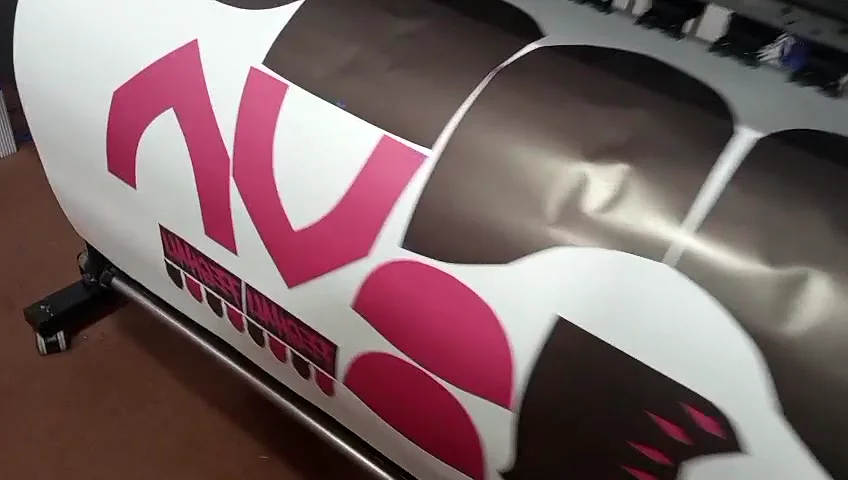
Every custom jersey starts with one decision that quietly determines how it will look five seasons from now: how the artwork gets onto the fabric. Sublimation and screen printing produce completely different jerseys — in durability, in color, in feel and in price — and both are running on factory floors every day, each doing the job it was designed for. This guide compares the two methods honestly, from the press floor where both processes run at SPORTIFY, so your team orders the right one the first time.
01What is dye sublimation?
Walk onto a sublimation floor and the process happens in three steps, panel by panel, before a single seam is sewn:
- The artwork is printed in mirror onto transfer paper using disperse dye inks — the same chemistry whether the press runs one jersey or a thousand.
- The paper meets white polyester — each garment panel is laid flat against the printed transfer and the pair goes into the heat press.
- Heat turns the dye to gas — at around 200°C the solid dye sublimates, skipping the liquid phase entirely. The polyester fibers relax and open, the gas bonds permanently inside them, and as the panel cools the polymer closes around the dye and locks it in.
That last step is the entire secret: the design does not sit on the fabric — it becomes the fabric. There is no layer to abrade, peel or wash away. And because panels are printed before the jersey is assembled, artwork can run seam to seam and edge to edge: hem stripes that never misalign, side-panel graphics that flow continuously, numbers printed directly into the knit.
02What is screen printing?
Screen printing is older, simpler and still the right tool for some jobs:
- One mesh screen is made per color — a fine mesh stretched on a frame, with a photo emulsion blocking every area that color should not print.
- Ink is pushed through — plastisol ink is squeegeed through the open mesh onto the garment, one color at a time, with a flash-cure between layers.
- Layers stack on top of the fabric — the finished print is a thin plastic film bonded to the surface, not inside the fiber.
Every color means another screen, another setup and another pass on press. A two-color logo is two screens; a six-color crest is six. That is why screen printers quote per color, why the method shines on simple marks at high volume, and why it struggles with the multi-color, full-coverage designs most teams actually want on jerseys.
03Durability head-to-head
This is where the two methods part ways permanently.
A sublimated design cannot peel, crack or flake because there is nothing on the surface to fail. The dye lives inside the polyester fiber. The only realistic degradation is slow fading after years of strong UV exposure and harsh detergent — and a performance polyester jersey usually dies of wear before its print fades visibly.
Screen printing fails exactly the way every former player remembers: the cracked jersey. A plastisol layer is a plastic film sitting on a stretchy surface. Every wash cycle, every shoulder check, every time the fabric is pulled over pads, the film flexes a little differently than the fabric beneath it. Over months the bond fatigues, hairline cracks spread across the numbers, edges lift, and eventually the print flakes away in pieces. Heat, sweat and fabric softener all accelerate it. On a garment worn, washed and stretched weekly — a team jersey — a screen print is on borrowed time from day one.
Factory Tip — The Crumple Test
- Crumple a printed area tightly in your fist and hold it for a few seconds.
- A screen print shows crack lines in the ink under this stress — the same failure that will spread after a season of washing.
- A sublimated garment shows nothing but wrinkles: the color is in the fiber, and the fabric simply returns to shape.
04Color and design freedom
Sublimation is a photographic process: the press prints whatever the artwork file contains.
- Unlimited colors at identical cost — a fourteen-color crest, a photoreal gradient or a camouflage fade costs exactly the same as a one-color silhouette, because the single dye pass does not change.
- Gradients, fades and halftones — smooth color transitions that screen printing can only approximate with visible dot patterns.
- All-over coverage — sublimated side panels, socks and collars can carry the design, not just the chest.
Screen printing is a spot-color process: every color must be separated, screened and stacked. Gradients break into coarse halftone dots, fine lines fill in, and each added color raises the price and thickens the ink stack. For a bold two-color event tee that is perfectly acceptable. For a modern team identity built on gradients and full-color crests, it is simply the wrong tool.
05Fabric requirements
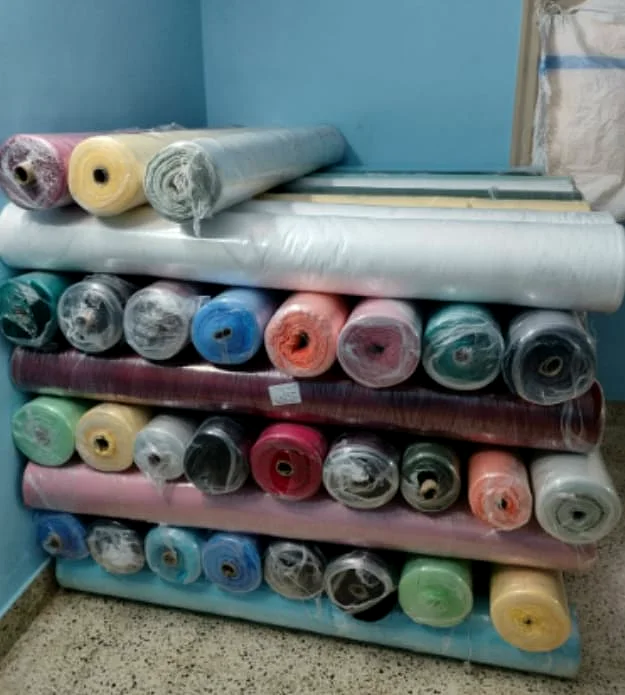
Sublimation only works on polyester — 85% content minimum, 100% for full vibrancy. The chemistry is unforgiving: disperse dye bonds with synthetic polymer fibers, and cotton offers nothing for the gas to lock into. Print sublimation onto cotton and the image appears dull, then mostly washes out.
Screen printing is far less picky: plastisol bonds mechanically to cotton, blends and synthetics alike, which is why it dominates the cotton T-shirt world.
For team sports this constraint barely matters, because performance polyester dominates athletic uniforms — it is the fabric that wicks sweat, holds color, survives laundering and takes sublimation perfectly. The situations where cotton is standard — training tees, event merch, casual club wear — are exactly where screen printing still earns its place.
06Cost comparison: when each method wins
Neither method is universally cheaper — it depends on design complexity and quantity:
| Factor | Sublimation | Screen Printing |
|---|---|---|
| Colors | Unlimited, no added cost | Added cost per color |
| Durability | Cannot crack or peel | Inks crack with age |
| Fabric | 85%+ polyester required | Cotton, blends, polyester |
| Feel | Zero — dye in the fiber | Plastic ink layer on top |
| 10 custom jerseys | $28–$45 each | $20–$32 (1–2 colors) |
| 50 custom jerseys | $20–$30 each | $14–$24 (1–2 colors) |
| 100 custom jerseys | $16–$24 each | $10–$18 (1–2 colors) |
| Best for | Multi-color team jerseys | Large runs of simple tees |
Screen printing wins when you need hundreds of identical, one- or two-color garments — event merchandise, sponsor tees, club training tops. Sublimation wins for any multi-color design at team quantities, and the more colors in your crest, the wider the gap. For sport-by-sport uniform pricing built on sublimation, see the 2026 custom uniforms cost guide.
07Feel and breathability
A sublimated jersey feels like raw fabric everywhere — because chemically, it is. There is no ink film blocking the knit's airflow, so mesh panels breathe, wicking channels work, and the garment stays as light as its undyed base.
A screen print changes how the garment wears wherever ink sits. The plastisol film blocks airflow across the printed area, holds sweat against the skin and adds a stiff, slightly rubbery patch. On a small left-chest logo that is imperceptible. On a full front-and-back jersey print it is a plastic shell over the torso — noticeable in August training and through every hot-climate season.
08What about tackle twill and embroidery?
Two other decoration methods complete the picture:
- Tackle twill — letters and numbers cut from fabric, layered and stitched down. This is the raised, textured lettering of pro hockey, baseball and college sports. Durable and premium, but priced per piece because a sewing operator finishes each one — which is why it is usually reserved for numbers and names on high-end jerseys.
- Embroidery — stitched thread for caps, polos, hoodies and jackets. Beautiful on stable, non-stretch garments; wrong for stretchy jersey bodies, where dense stitching restricts stretch and can pucker.
The strongest premium formula combines methods: a fully sublimated jersey with tackle twill numbers stitched over the print — full-color design freedom plus the raised, stitched feel of pro lettering.
09Which should your team choose?
The decision collapses to three questions:
- Is the garment polyester? If not — screen printing, or embroidery for caps and polos. If yes, continue.
- Does the design use two or more colors? Sublimation, without hesitation — same cost, no cracking, better feel, better breathability.
- Is it a very large run of one-color cotton tees? Screen printing is the cost-effective answer, and it is the honest recommendation for that job.
For the overwhelming majority of team orders — custom football, soccer, basketball, hockey, volleyball and baseball uniforms — the answer is sublimation. You can see the results across custom football uniforms, or start your own design below.
See your design sublimated
Send your logo and colors — SPORTIFY's design team returns a free mockup of your design on your chosen garment, with an itemized quote, before anything goes to production.