
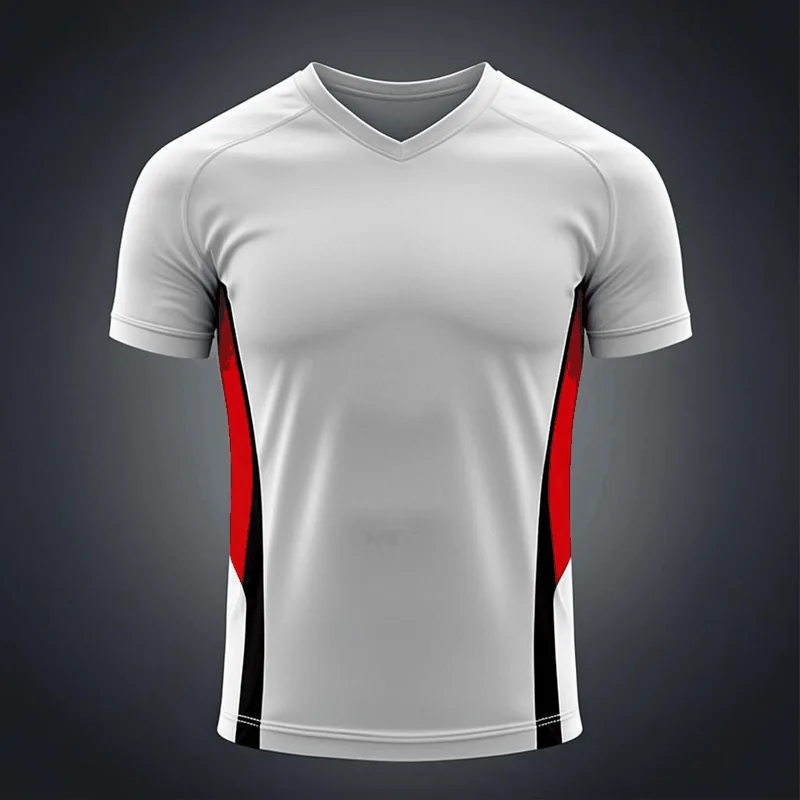
Volleyball moves faster than any other team sport, and its uniform is one of the most regulated garments we manufacture. A custom volleyball kit has to satisfy rules on libero contrast, number visibility and like-colored kits before it satisfies taste — and then it still has to stand out on a tournament court where every team in the hall is wearing a sublimated design. This guide covers rules-first design, fabric science, cuts, shorts and real 2026 pricing for custom volleyball uniforms, written by the factory team that produces them for clubs, schools and programs across the USA, Europe and Australia.
01What a complete volleyball uniform includes
A volleyball program is smaller than a football program, but every piece still has a job to do:
- Game jersey — the sublimated identity layer, in a lightweight poly-spandex that moves with every swing and dive.
- Spandex shorts — compression fit, chosen by inseam, worn by nearly every indoor program.
- Libero jersey — the contrast jersey worn only by the libero; designed alongside the team jersey, never as an afterthought.
- Warm-up top — a sublimated warm-up jersey or track top for pre-match and the bench.
- Optional layers — practice jerseys, long-sleeve options and coach polos to complete the program (see team packages).
Clubs typically order jerseys, shorts, libero jerseys and warm-ups in one production run. Everything is cut from the same fabric batch and printed in the same sublimation run, which guarantees color matching across the whole program — the detail that separates a club from a collection of teams.
02The rules you must know before designing
Volleyball is unusual in that the rulebook reaches directly into wardrobe design. Four requirements come up in almost every custom volleyball project — treat this as practical guidance and confirm the details with your federation, league or school association before production:
- Libero contrast. The libero must wear a jersey that clearly contrasts with the rest of the team — a different trim or number color is not enough. If the contrast is marginal, expect to be asked to change it at check-in.
- Numbers front and back. Jerseys carry a number on the chest and a larger number on the back. Commonly referenced minimums are around 15 centimeters on the front and 20 centimeters on the back; youth and school leagues often relax these, but designing to the larger figure is safe everywhere.
- Like-colored kits. Starting players must wear the same design, color and cut — the libero is the only exception. Mixed sleeve lengths or mismatched panels among teammates can be challenged at higher levels.
- Clean number visibility. Numbers must be solid and readable against the jersey body. Keep them off busy prints and give every number a contrasting fill, outline or panel behind it.
Because these rules shape the design itself, they belong at the start of the process — not as a check after the mockup is finished.
03The libero jersey
The libero is the one player allowed to break the team uniform, and the contrast rule exists so officials can track the libero's court movements instantly. The most reliable solution is also the best-looking one: design the libero jersey at the same time as the team jersey, as a color inversion of the same artwork. A navy-and-white team jersey becomes a white-and-navy libero jersey — unmistakably related, unmistakably different.
Three practical tips from production: avoid colors likely to collide with common opponent kits — red, royal and black are everywhere in club volleyball; keep the libero number in the same font and size spec as team numbers so it stays legible; and remember many liberos prefer long sleeves for floor defense, so specify the libero cut when you order.
04Fabrics for the modern game
Volleyball fabric is a specification, not a preference. The sport combines constant overhead arm swings, repeated dives on indoor courts and tournament weekends where one jersey is worn for six matches. What holds up:
- Weight — 150–180 GSM polyester-spandex is the modern sweet spot: light enough to dump heat between rallies, substantial enough to hold its shape through a season.
- Stretch — four-way stretch (typically 10–15% spandex) so the jersey moves with full extension at the net and recovers immediately.
- Seams — flatlock stitching lies flat against the skin and prevents chafing across the shoulders; the detail hitters and liberos appreciate most by day two of a tournament.
- Print surface — sublimation-ready polyester takes full-color designs that dye into the fiber and cannot crack or peel, and a moisture-wicking finish pulls sweat off the skin between points.
05Jersey cuts and fits
Volleyball jerseys are cut for overhead movement — the arm swings of serving, spiking and blocking decide the silhouette:
- Classic scoop neck — the traditional neckline, cut wide enough for a full range of motion.
- Raglan sleeve — the shoulder seam moves off the shoulder point for a freer swing, and opens contrast sleeve color options.
- Fitted women's cuts — hourglass-shaped panels rather than straight-cut men's sizing; the standard for women's and girls' programs.
- Long-sleeve options — chosen by many liberos for floor defense, and by programs in cold training halls.
- Youth cuts — proportioned for younger athletes, not scaled-down adult patterns.
Whatever the cut, check shoulder mobility on the sample: an athlete should be able to swing both arms fully overhead without the hem lifting or the neckline pulling.
06Shorts and spandex
Compression shorts are engineered around three decisions:
- Inseam — the 2.5–3 inch competition cut is the club standard; 4–5 inch mid options and 7 inch lengths suit training and school programs that prefer more coverage.
- Fit — true compression with a gusseted crotch panel, so the short moves as one piece with the body through lunges and dives.
- Waistband — a wide covered-elastic band sits flat and stays put; a drawcord adds adjustability for growing athletes.
Shorts can be sublimated in the same artwork as the jersey or kept solid in a team color. Care matters more here than on any other garment: cold wash, no fabric softener, air dry — heat and softener both break down elastane, and a dead pair of spandex shorts is the most common mid-season equipment failure in volleyball.
07Design ideas that pop on court
Every team at a tournament is wearing sublimation, so design quality is what separates kits on the court. The directions that work in 2026:
- Ombre gradients — shoulder-to-hem fades that read as two clean colors from distance and photograph beautifully in flight.
- Geometric patterns — chevrons, hexagons and diagonal speed lines that frame the torso and suggest motion.
- Neon accents on dark bases — volt, coral and hot pink pops against navy and charcoal; the dominant club look of the season.
- Tonal prints — texture within one color family for programs that want sophistication over loudness.
- Numbers first — whatever the surrounding design, legible high-contrast numbers are the difference between a jersey that plays and a jersey that gets replaced.
Beach volleyball follows different rules of its own: looser tank or crop tops, board-short style bottoms, no libero, and fabrics tuned for sun and sand rather than indoor courts. Programs that run both indoor and beach squads usually keep one design language and adapt the silhouettes.
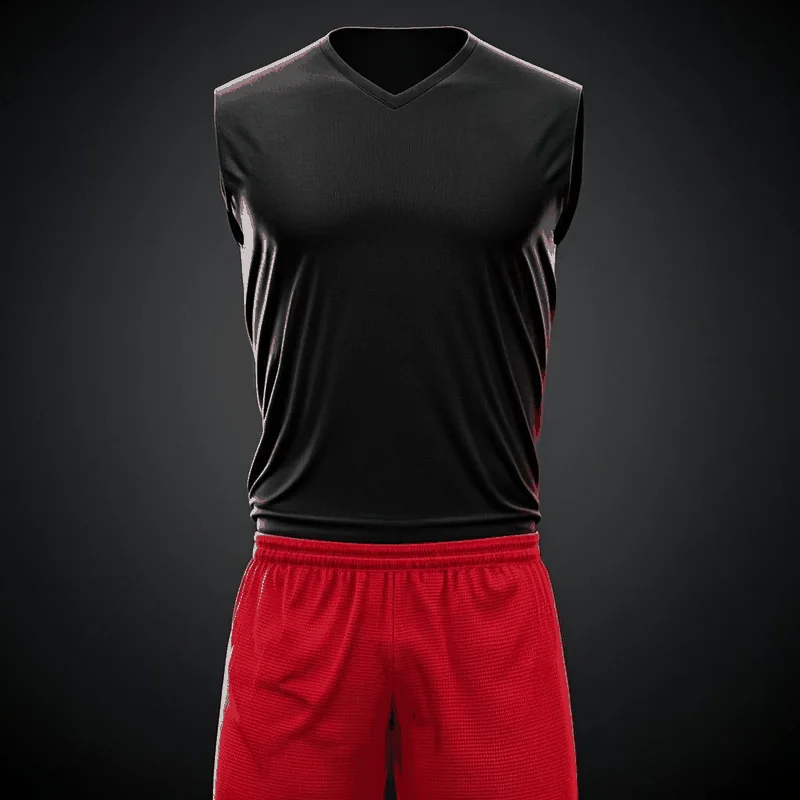
Factory Tip — The Libero Rule
- Design the libero jersey at the same time as the team jersey, as a color inversion of the same artwork.
- An inversion guarantees the required contrast and looks intentional on court — one design language, two palettes.
- Test the mockup at distance: view the jerseys side by side and zoom out until numbers and trim must still read clearly.
- Order a spare libero jersey with the main run; the libero is often the player hardest to fit mid-season.
08What custom volleyball uniforms cost in 2026
Current pricing from our 2026 production runs:
| Item | Budget range | Premium range |
|---|---|---|
| Volleyball jersey (sublimated) | $18–$26 | $27–$40 |
| Spandex shorts | $12–$17 | $18–$25 |
| Libero jersey | $18–$26 | $27–$40 |
| Warm-up top | $15–$25 | $26–$40 |
| Full kit (jersey + shorts) | $30–$43 | $45–$60 |
Price moves with quantity, fabric weight and extras like names on jerseys. Full-club orders spanning multiple age groups hit the best volume tiers, and single replacement pieces are covered by no-minimum ordering rather than forcing a team-wide reorder. For sport-by-sport comparisons, see How Much Do Custom Team Uniforms Cost? The 2026 Price Guide.
Get a free mockup for your team
Send your logo, colors and roster count — SPORTIFY's design team returns a digital mockup with the libero inversion included, free, before anything goes to production.
09Club and school programs
Club volleyball is a volume business — a single club may field a dozen teams from 12U to 18U. Three practices make multi-team programs run smoothly:
- One design system, many inversions — a single club artwork with per-team palette inversions distinguishes age groups while keeping the club unmistakable on the concourse.
- Tournament packs — game jerseys, libero jerseys, warm-up tops and coach polos produced together in one run guarantee color matching and better unit pricing.
- Design archiving — your approved artwork should be stored by the manufacturer so next season's teams are a reorder, not a redesign.
School programs follow the same logic at smaller scale: varsity, JV and freshman teams often share one design with small variations, and the boys' and girls' programs can run the same artwork in different palettes. Browse finished programs in the SPORTIFY volleyball collection and in our gallery, or start a custom project directly through the custom design service.