
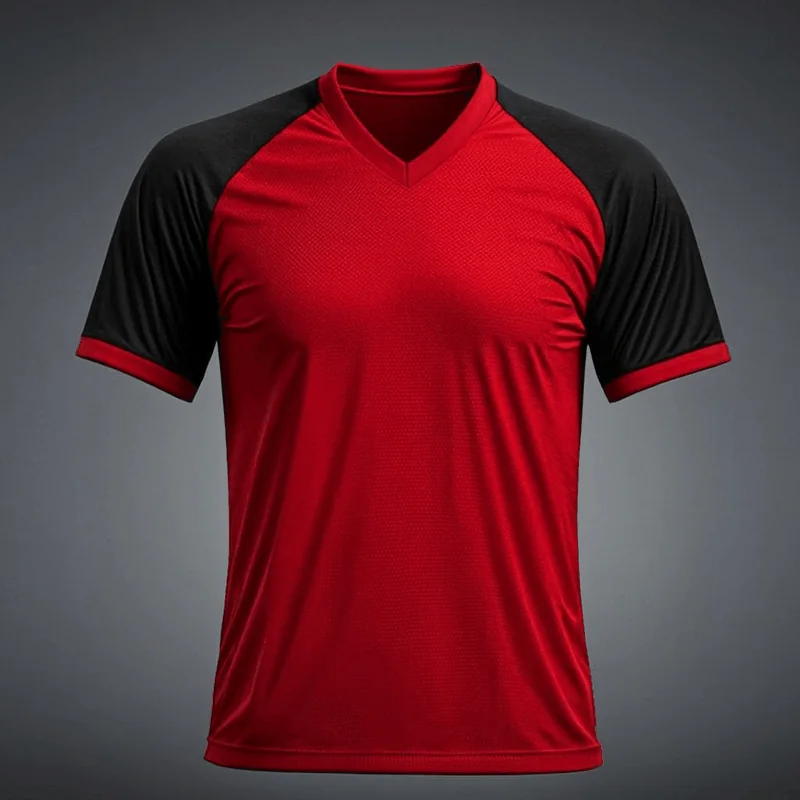
Flag football makes its Olympic debut at the Los Angeles 2028 Games, and the sport is growing faster than almost any on earth — powered by exploding girls' and women's participation in the United States, NFL investment and new federations across Europe and Australia. This guide covers everything coaches, league directors and parents need to know about flag football uniforms in the Olympic era: what the kit includes, the jersey and pants rules that get enforced, fabrics built for speed, design ideas, real 2026 pricing and league-wide ordering — written by the team that produces custom flag football uniforms on three continents.
01What is flag football — and why is it booming?
Flag football is the non-contact format of American football: instead of tackling, defenders stop the ball-carrier by pulling a flag from their belt. Five players per side, no helmets, no pads — the game keeps the passing, routes and open-field speed of tackle football without the collision risk.
Two forces explain the boom. First, flag football debuts as an Olympic sport at the LA 2028 Games, and federations across the USA, Europe and Australia are building pipelines — school leagues, youth divisions, national teams — to get there. Second, the NFL has made flag its global growth engine, funding leagues, tournaments and school partnerships as the safest, cheapest on-ramp to the sport.
The growth is loudest in the United States, where girls' flag football is among the fastest-growing high school sports, with new states sanctioning championship divisions every year; Australia and Europe keep adding divisions of their own. Every new team needs the same thing: a uniform built for the game's specific rules — starting with the flags themselves.
02What does a flag football uniform include?
A flag football uniform looks like a stripped-down tackle kit, but every piece is specified around the flag game:
- Game jersey — lightweight, close-fitting or designed to be tucked, fully sublimated with your design and numbers. With no pads underneath, flag jerseys are cut slimmer than tackle jerseys.
- Flag pants — integrated pants with the belt system built in, or loose athletic pants worn with a separate belt. Fabric must stretch for sprinting and cutting.
- Flag belt and flags — the defining component: three flags (hips and rear) or two flags (hips only), attached to a quick-release belt matched to your league's system.
- Optional soft-shell protection — soft knee and thigh layers are permitted in some leagues; hard pads are not. Check your rulebook first.
- Practice layers — reversible jerseys or pinnies for scrimmages, plus matching headbands, sleeves and coach shirts.
Because the flag belt is the only equipment, the jersey and pants carry the team's entire visual identity — which is why sublimated custom flag football jerseys are the default above recreational level. For the padded version of this game, see our custom football uniforms guide.
03Flag football jersey rules that affect your design
Most rule sets — NFL FLAG standards, school federations and international competition — share jersey rules that shape what you can order:
- No pockets. The most-enforced rule in the sport: pockets on jerseys or pants are banned because defenders' fingers catch in them during flag pulls — a genuine injury risk.
- Flags must stay visible. Jerseys are tucked or cut short enough that the hem never covers the flag belt — an oversized untucked jersey becomes an unfair shield over the flags.
- Numbering. Nearly all organized leagues require a unique number per player on the front and back of the jersey.
- Nothing hard or abrasive. Zippers, buttons, snaps and hard embroidery backings are prohibited on garments worn in play.
Factory Tip — The No-Pockets Rule
- Nearly every sanctioned flag football league bans pockets on both jerseys and pants — fingers get trapped during flag pulls. Specify "no-pocket" pants explicitly when ordering.
- Sewn-in belt loops — never metal hardware — are the standard for separate-belt leagues; they survive a full season of pulling on and off.
- Design the hem to sit at or above the belt line — a tailored shorter cut keeps flags visible and legal without constant tucking.
04Choosing flag football pants: integrated belts vs separate belts
Integrated flag pants have the belt system sewn in; loose pants are worn with a separate belt that players clip on themselves. Integrated pants are faster to dress, nothing gets lost in a kit bag, and flag placement is always correct — which is why school and league programs default to them. Separate belts cost less to replace and suit leagues that supply belts centrally.
- 3-flag systems (hips and rear) are the competitive standard in NFL FLAG and international play, because a third flag makes shielding the belt far harder.
- 2-flag systems (hips only) are common in rec and young youth leagues: simpler for small hands and cheaper to equip.
- Stretch is non-negotiable. Look for poly-spandex blends with 4-way stretch, so a defender's pull never drags the player.
- Coverage options: above-knee cuts for warm climates, full-length pants where turf burn is a concern, and soft-shell thigh and knee zones where rules allow.
Match the pant to your league's flag system before designing anything — the wrong pant makes the right belt unusable.
05Fabric and fit for a speed game
Flag football is a skill-position game — every player is running routes or chasing them, so uniforms should be built like track kit, not padding carriers. The fabrics we cut most for flag orders:
- 140–170 GSM polyester interlock — the sweet spot: light enough for summer tournaments, substantial enough to hold a sublimated design and survive weekly washing.
- Poly-spandex 4-way stretch (typically 90/10 blends) — compression-style fits that move with every cut and leave defenders nothing loose to grab.
- Mesh ventilation zones — underarm and lower-back panels for August heat; flag seasons often run through the hottest months.
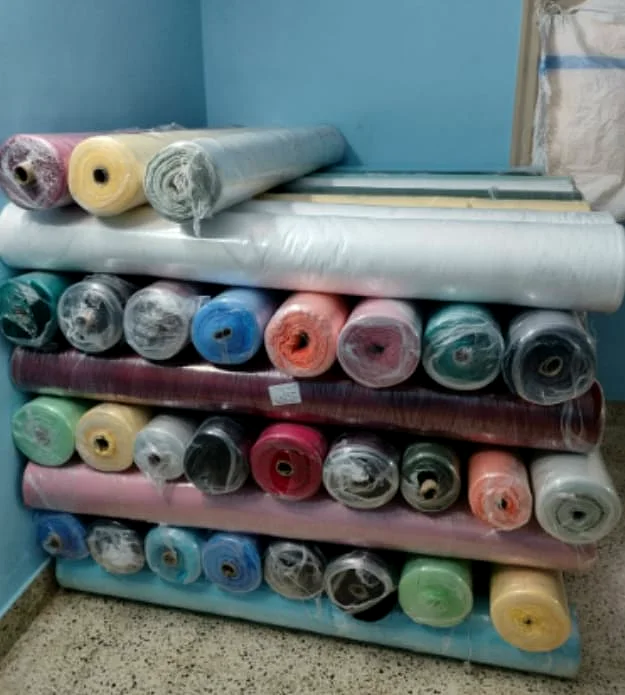
Fit follows the rules: tailored through the torso, hem at the belt line, sleeves short of the elbow — teams moving from tackle should not reorder their old pattern.
06Flag football design ideas that win
Flag rosters are smaller, the uniforms lighter and the game faster — so designs can run bolder than tackle football. The directions we produce most:
- Bold color blocking — two large color fields split at the shoulder or side seam; readable from the far sideline and on camera.
- Gradient fades — smooth sublimated transitions, especially sunset and neon palettes that dominate girls' and women's league orders.
- Reversible jerseys — a dark side and a light side in one garment solves practice scrimmages instantly.
- Women's and girls' cuts — not just smaller: narrower shoulders, adjusted bust shaping, higher waistlines on pants. This matters more in flag than in any other sport.
- Olympic-era styling — national-team-inspired chest crests and clean two-color schemes, a look new flag programs now ask for by name.
Browse the SPORTIFY flag football collection for sublimated sets across these directions, and see how unlimited-color printing works in Sublimation vs Screen Printing: Which Is Better for Custom Jerseys?
07Youth, school and league programs
The teams ordering flag uniforms are changing as fast as the sport. Rec leagues order by the hundred; schools add girls' flag to their fall lineups; NFL FLAG and affiliated leagues run league-wide programs in which every age division wears a coordinated system — same template, different colorways per division.
For league directors, three practices make program ordering painless:
- Order league-wide, not team-by-team. One production run with a shared template drops the per-player price and keeps every team looking like one league.
- Standardize sizing. Publish one size chart to every family and collect measurements once; mixed sizing across divisions is where program orders go wrong.
- Archive the design. Next season should be a reorder with new names and numbers, not a redesign — SPORTIFY archives every approved league design for exactly this reason.
With Olympic flag football 2028 on the horizon, most leagues we supply in the USA, Europe and Australia now plan multi-year uniform programs rather than one-off season orders. See team packages for how bundled programs are structured.
08How much do flag football uniforms cost in 2026?
Expect $30–$60 per player for a full custom sublimated set (jersey + pants), with jerseys at $18–$35 depending on fabric and quantity. Realistic 2026 ranges:
| Item | Budget Range | Premium Range |
|---|---|---|
| Custom game jersey (sublimated) | $18–$24 | $28–$35 |
| Flag pants (integrated belt) | $15–$20 | $22–$28 |
| Full set (jersey + pants) | $30–$45 | $48–$60 |
| Reversible practice jersey | $20–$27 | $30–$40 |
| Flag belts (per player) | $3–$6 | $7–$10 |
Price moves with quantity (full-roster and league orders unlock volume pricing), fabric weight and extras like names on jerseys. Single replacement pieces cost more per unit — no-minimum ordering exists for exactly that. For sport-by-sport comparisons, see How Much Do Custom Team Uniforms Cost? The 2026 Price Guide.
Get a free mockup for your flag program
Send your logo, colors and roster count — SPORTIFY's design team returns a digital mockup and a quote, free, before anything goes to production.
09Sizing and ordering tips
- Measure, don't guess. Collect chest and waist measurements for every player and map them to the manufacturer's size chart — youth sizes vary wildly between brands; body measurements don't.
- Order girls' and women's cuts where the roster calls for them. Sizing down a men's jersey is not the same cut, and flag has more girls' and women's rosters than any contact sport.
- Add spares in common sizes (M, L, XL) — late registrants join every league, and mid-season reorders pay rush prices.
- Number at ordering time. Names and numbers are sublimated before the garment is sewn; assign numbers before production, not after delivery.
- Order 6–8 weeks before opening day: 3–5 days for mockup rounds, 2–3 weeks of production, 5–10 days of international shipping, plus buffer for customs and roster changes.