
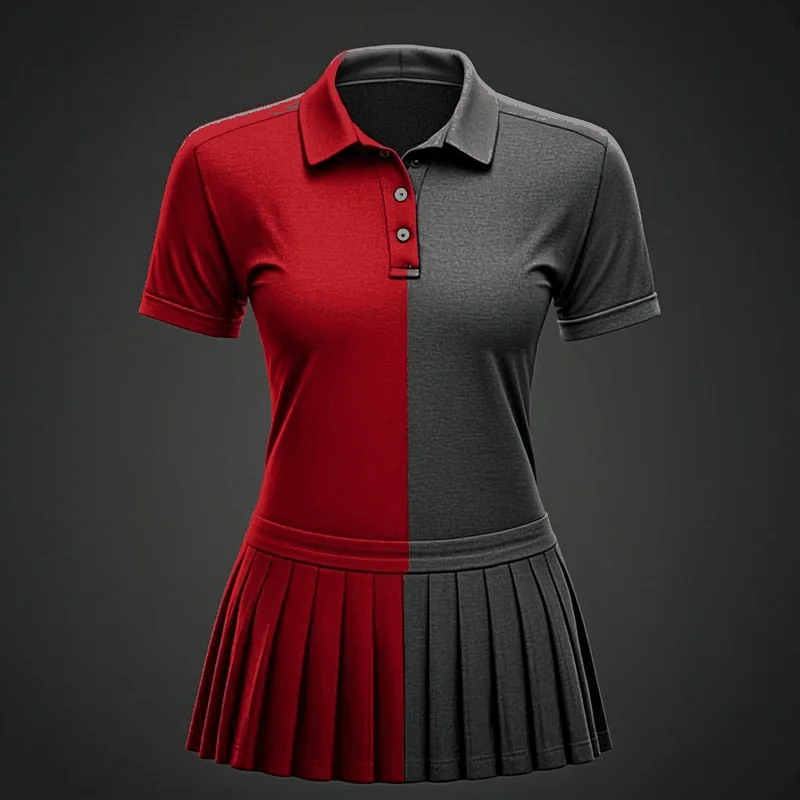
Field hockey is the world's quietest powerhouse sport: an Olympic fixture with national leagues across the Netherlands, Germany, Belgium, Great Britain, Spain, Australia, Argentina, India and a fast-growing American school and festival scene. And its buying season is unusual — European indoor hockey runs right now, November through February, while outdoor seasons dominate spring through autumn. That double calendar makes field hockey one of the most reliable year-round uniform categories we produce. This guide covers everything clubs, schools and program directors need to know about custom field hockey uniforms: jerseys, skorts and shorts, the federation rules that shape design, fabrics built for turf, indoor versus outdoor kit, design directions, real 2026/27 pricing and the ordering windows that land kit before the season starts — from the factory in Sialkot.
01Field hockey's quiet global boom
Field hockey doesn't trend on highlight shows — it just steadily supplies more teams to kit every year, on every continent that matters to a uniform factory.
- Europe is the sport's heartland — the Netherlands, Germany, Belgium, Great Britain and Spain run professional and semi-professional club systems with junior pipelines that order kit by the section, and indoor hockey season runs November–February, putting European indoor kit orders on the factory calendar right now.
- The American scene is compounding — school and club field hockey is among the fastest-growing girls' sports in the United States, with national festivals and college pipelines driving full-team outfitting.
- Australia runs a winter club season with a production schedule that mirrors football's — orders concentrate March through May.
- As an Olympic sport, field hockey carries a four-year participation halo; national federation funding flows into junior programs that all need club-level kit.
02What a custom field hockey kit includes
A field hockey kit is lighter and closer-fitting than most team kit — the game is played bent over a stick at sprint speed:
- Playing shirt — a sublimated jersey in club colours; slimmer cut, shorter sleeves, built for a low playing posture and repeated sprinting.
- Skort or shorts — the women's game wears skorts (a skirt with built-in compression shorts); the men's game wears shorts. Both are produced in-house with matching design.
- Hockey socks — over-knee socks in club colours, the visual signature of the sport; matched to the shirt design and ordered two pairs per player.
- Indoor kit — lighter shirt, often with shorter sleeves, plus indoor-specific socks; indoor hockey is played on handball-style courts at a faster tempo.
- Training layers — polos, quarter-zips and hoodies carrying the club identity for winter training, plus goalkeeper kit as a separate padded category.
Browse the SPORTIFY field hockey collection for the full range — every piece full-sublimation with club colours, crest, names and numbers printed into the fabric.
03Skorts vs shorts — and what the rules actually say
The skort is field hockey's signature garment: a skirt shell over built-in compression shorts, combining the traditional look with real athletic function.
- Women's teams overwhelmingly wear skorts — partly tradition, partly function: the inner short layer prevents ride-up during the sprint-and-bend posture the game demands.
- The rules allow both — international regulations permit shorts or skorts for playing clothing; clubs choose by tradition, and most women's sections choose the skort.
- Quality details that matter — flatlock inner seams (no chafing over a long tournament weekend), a wide comfort waistband, and inner shorts that actually stay put through a full match.
- Men's shorts follow football's pattern — lightweight, with internal drawcord, cut for the same sprint posture.
Factory Tip — The Two-Season Club Order
- European clubs playing both formats should order indoor and outdoor kit in the same production run — shared setup, identical club identity, volume pricing across the combined quantity.
- Make the indoor kit the visual cousin of the outdoor one — same crest and numbering, inverted colour scheme — so sections are recognisable in both halls and stadiums.
- Order over-knee socks at two pairs per player in the same run; socks are the kit's consumable and mid-season reorders pay single-piece rates.
04Federation rules that shape hockey jersey design
Field hockey is one of the more codified sports on uniform details — the rules that most often shape a mockup:
- Numbers: back and front — a large number on the back and a smaller number on the front are standard; squad numbers 1–18 with names above the back number are the international convention.
- Team sock colours — both teams' playing kit, including socks, must be visibly distinguishable; if your club colours clash with a regular opponent, an alternate sock-and-shirt set solves it cheaply.
- Nothing hard or dangerous — buttons, buckles and hard zip pulls are out; sublimation's printed plackets are the natural solution.
- Sponsor zones — league and national federations regulate sponsor size and placement for competition; send the current rules with your logo set so the mockup is compliant from round one.
- Captain identification — a captain's armband or badge is easy to include in the design (or supply as a separate set).
05Fabrics built for turf and speed
Field hockey is a repeated-sprint sport played low to the ground on abrasive turf — fabric choices are about ventilation and surviving slides.
- 140–170 GSM polyester interlock — the standard hockey shirt weight: light, breathable and opaque in bright club colours.
- Poly-spandex 4-way stretch — increasingly the default; the stretch panel moves with the bent-over playing posture instead of fighting it.
- Mesh ventilation zones — underarm and back panels for the running load; field hockey shifts are nonstop.
- Reinforced skort inner shorts — the hidden quality marker: flatlock seams and durable compression fabric that survives turf contact all season.
- Indoor variations — lighter shirts and different sock lengths for the hall game, where ventilation matters more than abrasion.
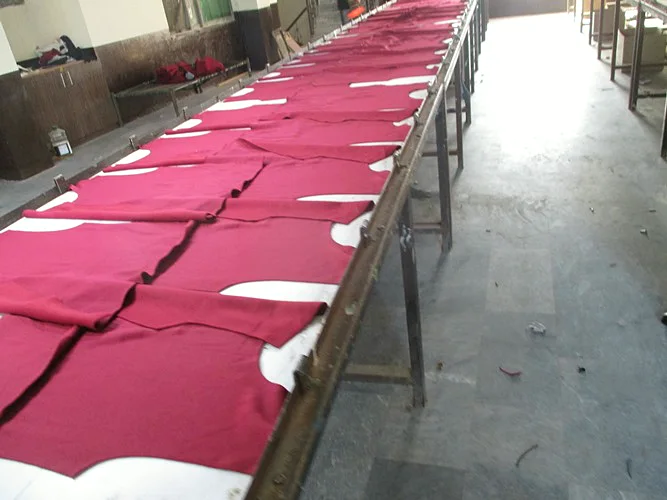
06Design directions that work on turf
Hockey shirts are small canvases that read at speed — the best designs are bold and simple:
- Pinstripe tradition — the classic hockey look, vertical stripes in club colours; reads instantly and carries decades of heritage.
- Neon and high-vis accents — a modern European direction, partly style and partly visibility on water-based turf under floodlights.
- Gradient shoulders — sublimated fades from shoulder to hem; modern without sacrificing readability of numbers.
- Crest-forward design — many European clubs anchor the whole design on a left-chest crest and a clean base; nothing ages better.
- Matching sock design — over-knee socks are half the visual identity; hooped or gradient socks matched to the shirt turn a kit into a uniform.
07Indoor vs outdoor — the two-kit question
European clubs face a structural choice every season, and the practical answer is usually "both, in one order":
- Indoor season (November–February) — lighter shirts, shorter cut, played on handball courts in front of standing crowds; kit orders placed in autumn deliver before the January championship push.
- Outdoor season (spring–autumn) — the primary kit, heavier fabrics, full skort or short, ordered in late winter for spring delivery.
- Shared identity, different silhouettes — one crest, one numbering system, two colour inversions; parents and sponsors recognise the club in both venues.
- Budget efficiency — combined indoor-plus-outdoor quantity moves both kits into volume pricing tiers, often making the indoor set close to free at the margin.
08What custom field hockey uniforms cost in 2026/27
Expect $35–$55 per player for a full kit (shirt + skort or shorts + socks). Realistic 2026/27 ranges:
| Item | Budget Range | Premium Range |
|---|---|---|
| Custom field hockey jersey | $18–$24 | $26–$30 |
| Custom skort (women's) | $16–$22 | $24–$26 |
| Custom shorts (men's) | $14–$20 | $22–$26 |
| Over-knee hockey socks (per pair) | $5–$7 | $8–$10 |
| Full kit (shirt + bottom + socks) | $35–$46 | $48–$55 |
| Indoor kit (shirt + socks) | $24–$31 | $34–$40 |
Women's and girls' garments price identically to men's. Replacement jerseys and single-piece orders run through no-minimum ordering, and the full sport-by-sport comparison lives in the 2026 price guide.
Get a free mockup for your hockey program
Send the crest, colours and section list — indoor, outdoor or both — and the design team returns mockups and a quote, free, before anything goes to production.
09Sizing and the ordering timeline
- Measure, don't guess. Chest and waist for every player mapped to the size chart; skort waistbands punish guesswork more than any other garment.
- Order spares in the middle sizes — youth programs grow mid-season; spare M and L shirts and skorts save rush reorder costs.
- Numbering and names at order time — sublimated before sewing; collect the roster with the measurements.
- Indoor clubs: order now (late November) — 2–3 weeks of production plus shipping lands kit for the January championship stretch of the indoor season.
- Outdoor clubs: order February–March in Europe for spring openers; Australian clubs order March–May for the winter season. The general 6–8-week rule covers all of it.
Field hockey sections often share club infrastructure with rugby and cricket programs — combined club orders across sports are one of the most efficient ways to hit volume pricing.