
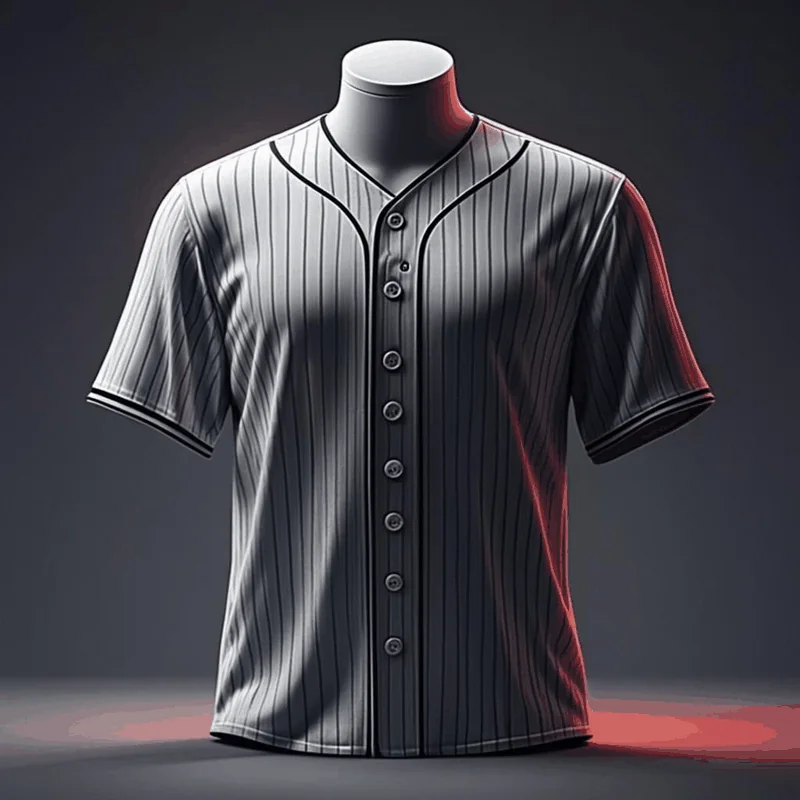
Baseball and softball uniforms carry more tradition per stitch than any other team kit. Pinstripes, button-front jerseys, belted pants and structured caps trace back more than a century — and yet the modern diamond look is also one of the most customizable in sport, with full sublimation putting photorealistic design within reach of youth clubs, high schools and travel teams. This guide walks through every component of the kit, the two jersey schools, pants conventions, softball-specific styling and real 2026 pricing, written by the manufacturing team that produces custom baseball and softball uniforms for teams across the USA, Europe and Australia.
01What a complete baseball and softball uniform includes
A diamond uniform is a system of separate pieces that only works when every piece agrees. Unlike a soccer kit, where the jersey carries most of the identity, a baseball look is assembled from six coordinated components — and one mismatched piece breaks the whole set:
- Game jersey — button-front or full-sublimation pullover, in home white, away grey or an alternate color.
- Game pants — open-bottom, elastic-hem or knicker cut, in white, grey or pinstripe, with optional side piping.
- Cap or visor — structured or unstructured six-panel cap for baseball; visors are standard for many softball programs.
- Undershirt — usually a 3/4-sleeve compression top in a team color that shows beneath the jersey sleeve.
- Belt and socks — the classic finishing pair; the belt picks up the cap color, the socks pick up the piping or undershirt.
- Softball variants — fitted V-neck jerseys, scalloped-hem shorts or pants, ribbon and bow accents, and sliding shorts underneath.
Ordering the full program at once unlocks better unit pricing than buying the jersey first and chasing the rest mid-season. SPORTIFY builds complete programs through its team packages service, with every piece color-matched at the factory before anything ships.
02Button-front vs full-sublimation jerseys: the two schools
Almost every custom baseball jersey we cut belongs to one of two schools. The button-front jersey is the traditionalist: a full or two-button placket, sewn lettering, real piping and the exact silhouette professional players wear. The full-sublimation pullover is the modern standard for youth, travel and club teams: a closed-front stretch jersey in which every color, stripe, number and logo is dyed directly into the fabric.
| Factor | Button-Front Jersey | Full-Sublimation Pullover |
|---|---|---|
| Heritage look | Authentic pro-style silhouette with placket and buttons | Modern athletic look with clean front canvas |
| Customization | Sewn piping and twill lettering in limited zones | Unlimited colors, gradients and patterns at no extra cost |
| Cost (2026) | $30–$60 | $22–$45 |
| Durability | Snag points at buttons and buttonholes | Dye sits inside the fiber — cannot crack or peel |
| Fit | Traditional looser cut | Contoured athletic cuts available |
| Typical buyer | Senior clubs, traditional programs, pro-look fans | Youth, travel, high school and softball teams |
For most youth, travel and softball programs, sublimation wins on cost, turnaround and design freedom: a photographic gradient or a full-color team crest costs the same as two solid colors, because dye is not priced per color. Traditional senior clubs chasing the authentic big-league look still choose button-fronts, accepting the extra cost and more limited decoration zones. The underlying print technologies are compared in depth in Sublimation vs Screen Printing: Which Is Better for Custom Jerseys?
03The pinstripe tradition
No design element says baseball like pinstripes. The stripe rose to prominence in the early 1900s and became an institution through the New York Yankees' white-and-navy home uniform — arguably the most recognizable kit in professional sport. Pinstripes began as practical tailoring: vertical lines made heavy wool flannel uniforms look taller and sharper on athletes of every build.
The classic formula still works: a white or off-white body, navy or black pinstripes, a solid-navy cap and undershirt. Modern programs push it further — red stripes on black, gold on navy, royal on white — and sublimation adds options woven fabric never allowed: tapering stripe widths, gradient fades and micro-pinstripes that continue seamlessly from jersey to pant. Two rules keep pinstripes sharp: keep the stripes evenly spaced and truly vertical, and match the stripe color and weight between jersey and pants on pinstriped sets.
04Baseball pants styles and conventions
Pants carry roughly half the visual weight of a baseball uniform, and the cut changes both the look and the laundry:
- Open-bottom pants — the traditional cut: a clean-finished hem worn slightly over the cleat; the professional standard.
- Elastic-hem pants — the cuff grips the ankle, so no hemming is needed; the youth and softball workhorse.
- Piped pants — a contrast stripe runs down the outer seam, tying the pant to the jersey trim.
- Knicker pants — end just below the knee and pair with high striped socks for a deliberate retro look.
Color conventions are just as established: white pants at home, grey on the road, pinstriped pants as a home alternate. Practical note for programs on a budget: grey hides infield clay far better than white, which is why many clubs wear grey all season and save white sets for showcase games.
05Softball-specific design
Softball uniforms share DNA with baseball kits but have evolved their own design language — leaner, fitted and more expressive:
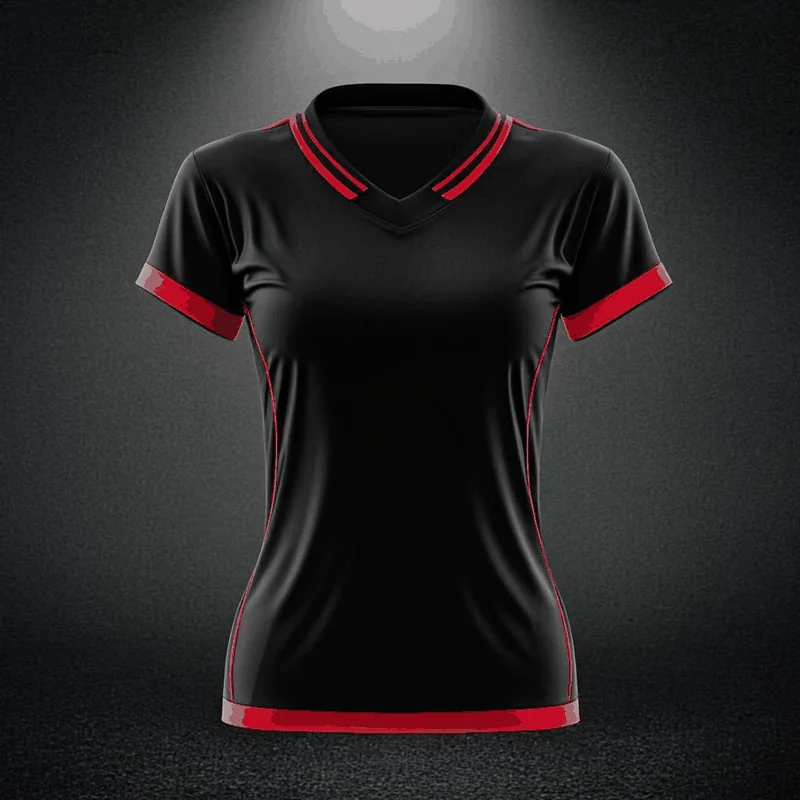
- Fitted jerseys in stretch poly-spandex with V-neck or scoop necklines, cut close through the torso.
- Scalloped-hem shorts and pants, with the curved hem that has become a softball signature.
- Ribbon accents braided into sleeve trim and hem lines for an extra color layer.
- Bows and visors replacing the structured cap — bows in team colors or sublimated ribbon that matches the jersey print.
- Bolder palettes — softball programs adopt neon accents, ombre fades and full-print bodies faster than baseball programs do.
The SPORTIFY softball collection shows the range, from traditional belted kits to fully sublimated fitted sets. The same factory lines produce both sports, so softball teams get identical fabric quality and sublimation capability.
06Caps and matching accessories
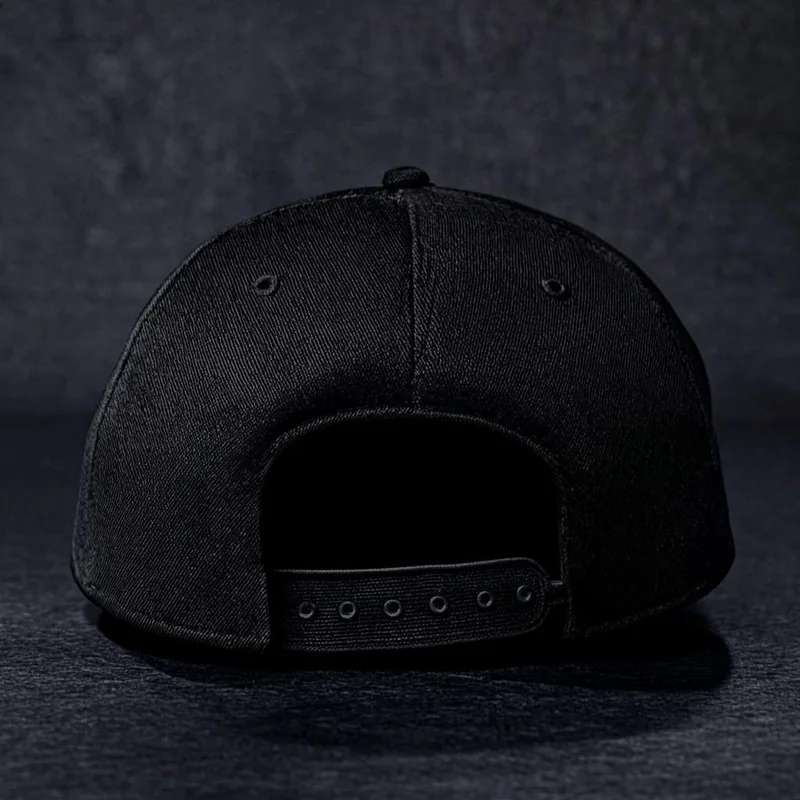
The cap is the most photographed piece of a baseball uniform — it is on every player's head in every game picture and usually the first item fans buy. Two construction families dominate:
- Structured caps — a stiff buckram crown holds a high, defined profile; the classic on-field look.
- Unstructured caps — a soft, unlined crown that collapses when off the head; lower profile, popular for practice wear.
Decoration follows the jersey's method. 3D puff embroidery raises the logo off the crown for a bold, modern mark; flat embroidery gives the traditional stitched look; fully sublimated caps print edge-to-edge designs, gradients and patterns that stitching cannot reproduce. The rule that matters most: the cap must pick up a color from the jersey — trim, piping or undershirt — so the head and body read as one uniform.
07Designing a cohesive diamond look
The strongest diamond programs design three uniforms as one system rather than three separate orders:
- Home set — white jersey with white or pinstriped pants; the crisp, traditional look.
- Away set — grey jersey or a white jersey over grey pants; subdued and clay-friendly.
- Alternate set — a full-color sublimated jersey and pant for tournaments, playoffs and statement games.
Piping and plackets hold the system together. Contrast piping along the placket, sleeve ends and pant seams frames the body — and because all three sets share the same piping color and number font, the program looks related even when base colors change. Keep one number style throughout: a full block or varsity outline in the highest-contrast combination available. Finished programs are browsable in the SPORTIFY baseball collection and in our gallery of shipped team designs.
Factory Tip — Piping Perfection
- Sewn piping lives or dies on binding precision: a 1/8-inch wander along a placket is visible from the stands. Every piped panel is measured twice before stitching.
- Sublimated simulated piping prints the stripe into the fabric — lighter than sewn binding, perfectly straight on every jersey, and it can never fray or unravel.
- Match pant piping to jersey trim across home, away and alternate sets so mixed pieces still look intentional.
08What baseball and softball uniforms cost in 2026
Current pricing from our 2026 production runs:
| Item | Budget range | Premium range |
|---|---|---|
| Sublimated pullover jersey | $22–$32 | $33–$45 |
| Button-front jersey | $30–$45 | $46–$60 |
| Game pants | $18–$25 | $26–$35 |
| Cap | $8–$12 | $13–$18 |
| Belt and socks (set) | $5–$10 | $8–$14 |
| Full kit per player | $60–$85 | $90–$110 |
Price moves with quantity, fabric weight, button hardware and cap embroidery. Two habits protect the budget: order the full roster at once to hit volume tiers, and use no-minimum ordering for late call-ups and replacements instead of holding the entire order. For sport-by-sport comparisons with package pricing, see How Much Do Custom Team Uniforms Cost? The 2026 Price Guide.
Get a free mockup for your team
Send your logo, colors and roster count — SPORTIFY's design team returns a digital mockup and a quote, free, before anything goes to production.
09Sizing, break-in and care
Diamond uniforms are sized piece by piece:
- Jerseys — measure chest and height, then map to the manufacturer's size chart rather than retail brand sizes. Order 2–3 spares in M, L and XL for mid-season call-ups.
- Pants — buy by waist and inseam. Open-bottom pants can be ordered long and hemmed to the cleat; elastic-hem pants need the inseam right from the start.
- Caps — fitted caps size by head circumference; snapbacks cover the full range.
Break-in and care: new poly fabric feels stiff and softens after two or three washes. Wash everything cold and inside-out, skip bleach and fabric softener — softener coats performance fibers and kills wicking — and air-dry rather than machine-dry. Caps should be spot-cleaned or hand-washed in a form to protect the structured crown.